Nicotine, without the tobacco.
ESSENZ builds (S)-nicotine molecule by molecule through proprietary chiral catalysis. No leaf, no curing, no crop risk.
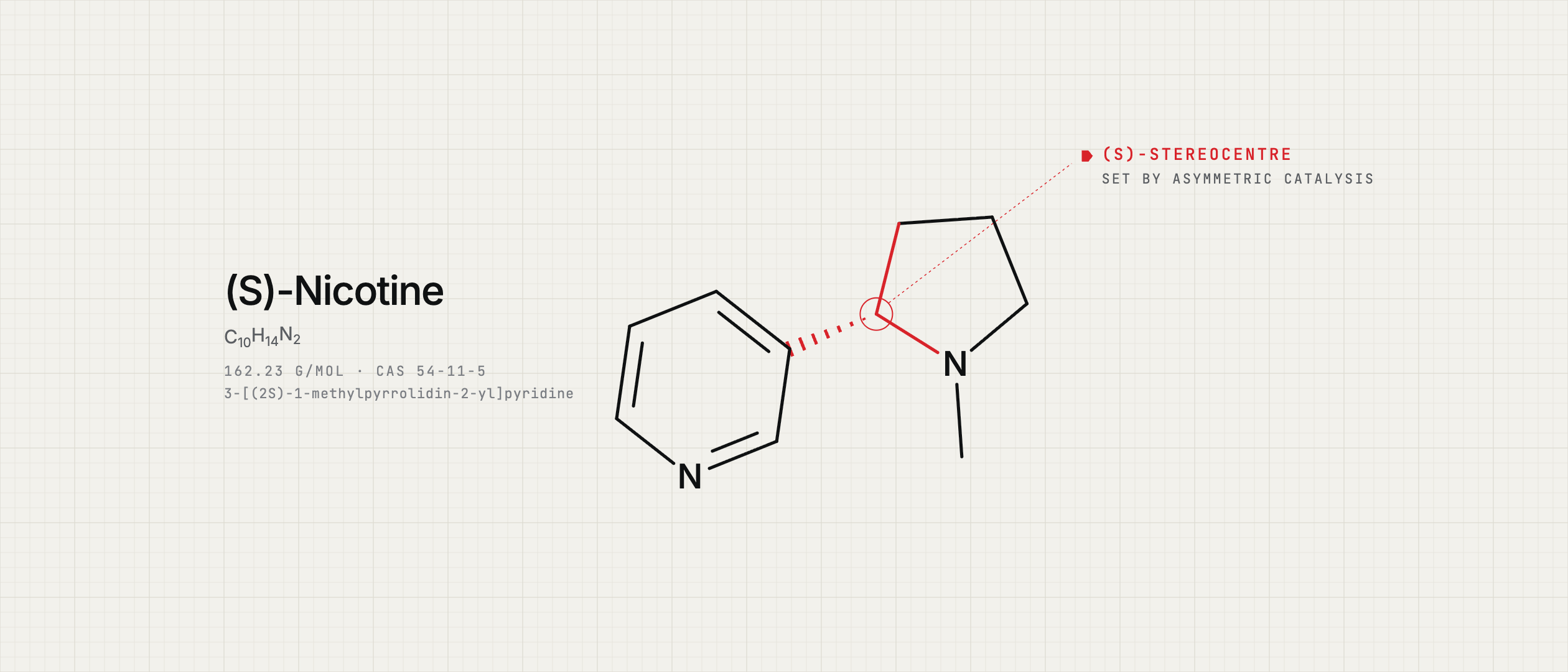
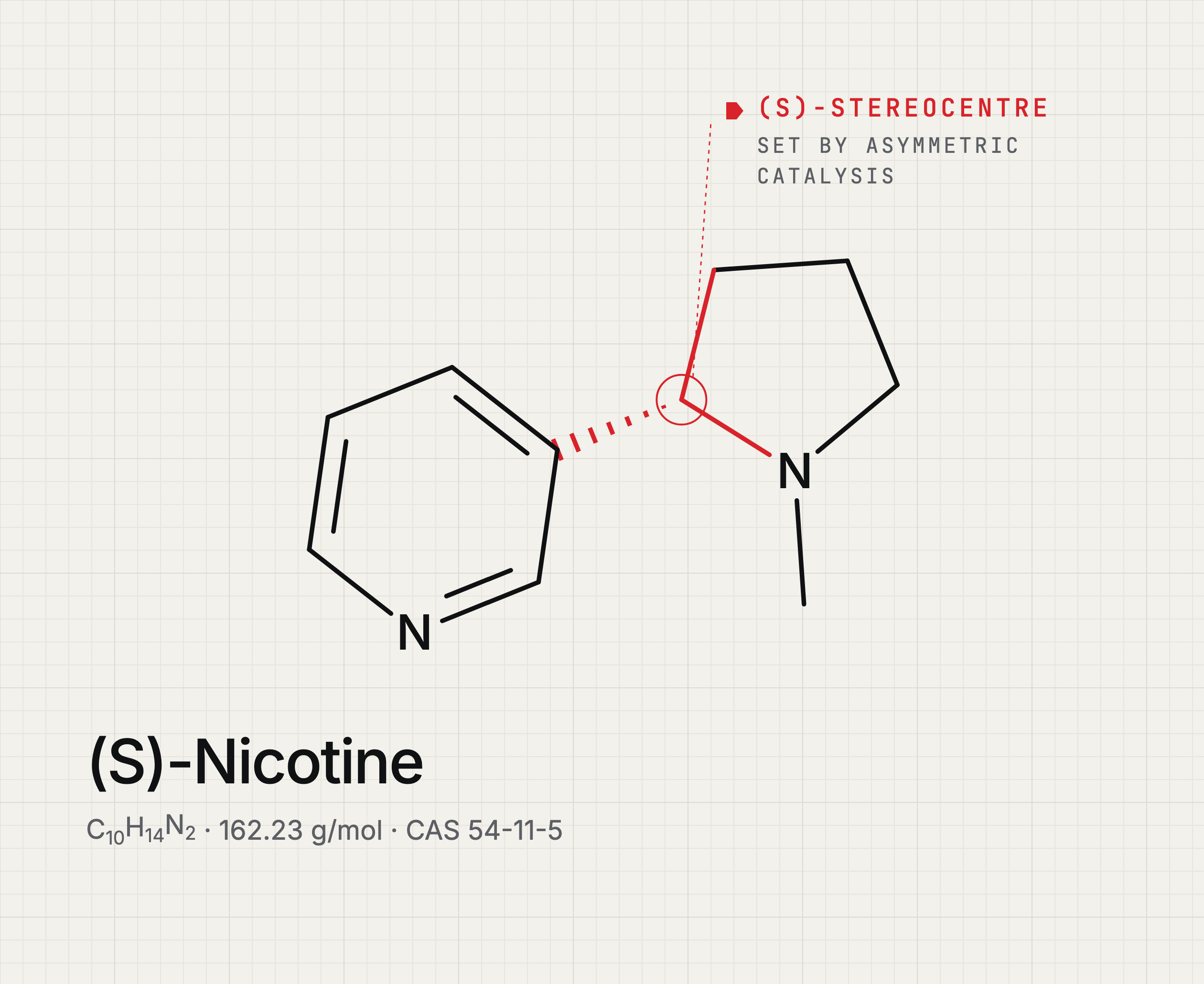
Tobacco nicotine brings the field with it.
Every kilogram extracted from leaf carries what the plant absorbed and what curing created. Refining reduces it; it can’t remove the source.
Impurities by origin
Nitrosamines form during curing. Minor alkaloids come from the plant itself, and pesticides are used on the crop.
Agricultural footprint
About 25 kg of nicotine per hectare of tobacco2, plus the water, fertiliser, pesticide and curing fuel that go into it.
Crop-bound supply
Harvests, weather and origin swing both yield and impurity profile season to season — so every new lot needs requalifying.
Synthetic (S)-nicotine, seen from purchasing and formulation.
- Same molecule(S)-nicotine identical to the plant's, not a racemic mix, so it replaces tobacco-derived nicotine molecule for molecule.
- Supply that ignores the harvestNo crop, weather or origin risk. Production runs year-round, with capacity up to 10 t a month.
- Impurities ruled out by designNo plant-only alkaloids such as anabasine and anatabine, no pesticide inputs and no curing step.
- One specification, every batchThe same defined inputs and the same written release specification, with a certificate of analysis for each batch.
- A smaller footprintMore than 99% less land and more than 95% less water than tobacco-derived nicotine2.
- No farm labour in the chainNo green-tobacco sickness and no child-labour risk behind your ingredient.
The carcinogens that tobacco curing makes.
Tobacco-specific nitrosamines (TSNAs) form mainly when tobacco alkaloids react with nitrite as the leaf is cured and stored. Synthesis involves no leaf, so what remains is chemistry a specification can control: precursor impurities and nitrite.
Natural against synthetic, line by line.
Three commercial sources of nicotine and ours. Numbers only, each with a source.
| Metric | Tobacco-derived USP / EP | Synthetic racemic | Synthetic (S) enzymatic route | ESSENZ (S) chiral catalysis |
|---|---|---|---|---|
| Chemical purity6 | 99.7–99.96% | — | 99.5–99.96% | 99.9% |
| (S)-share7 share of the (S)-enantiomer | ≈ 99% | 50% · racemic | ≥ 99% | 99.9% · ee 99.85% |
| Pesticide inputs | Used on the crop | None used (no crop) | None used (no crop) | None used (no crop) |
| Supply basis | One growing season a year; varies by origin | Year-round (no crop) | Year-round (no crop) | Year-round (no crop) |
Land
Water
One chiral step does what the plant does.
Developed by ESSENZ Chief Scientist Prof. Xumu Zhang and his team, our chiral catalysis builds (S)-nicotine directly — the same molecule the tobacco plant makes — with no resolution step, no enzymes and no harvest to depend on.
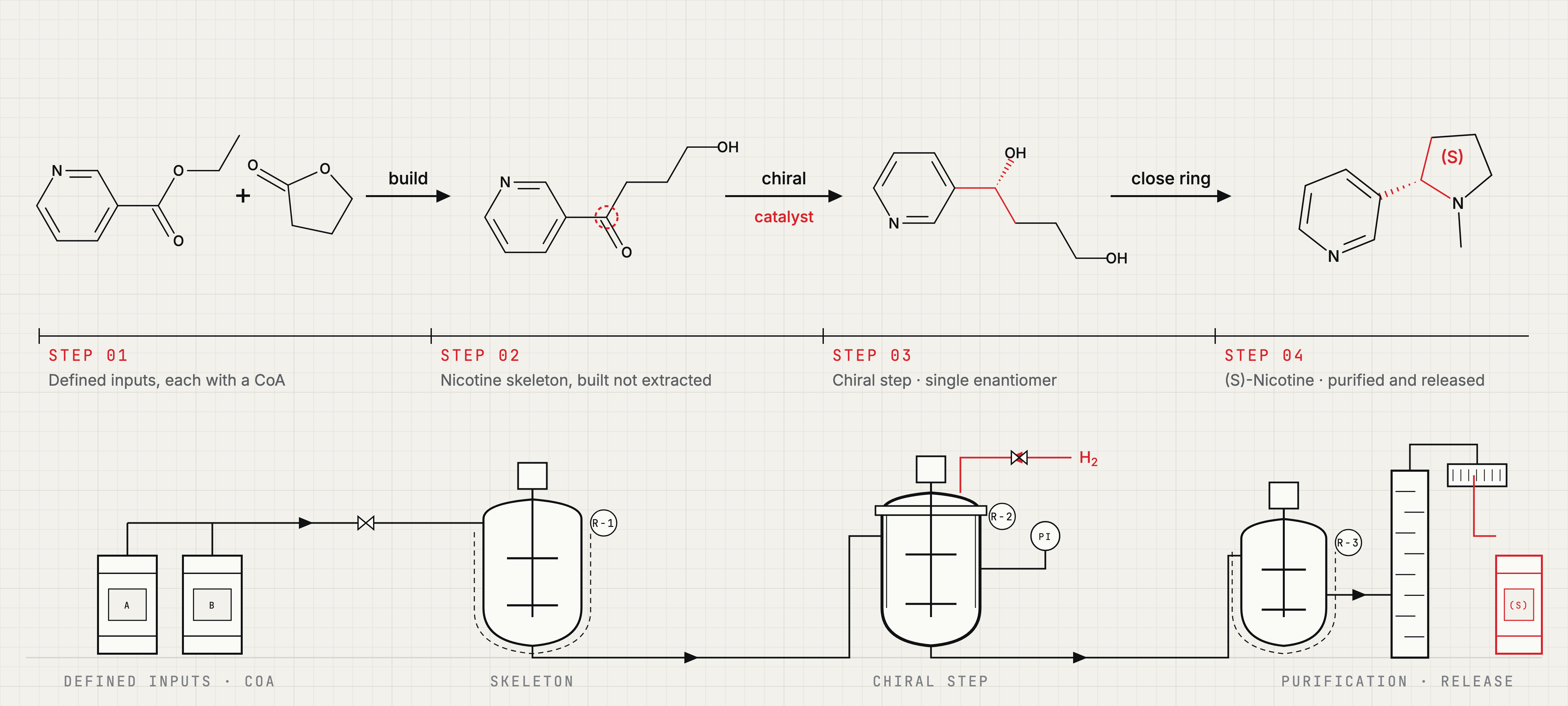
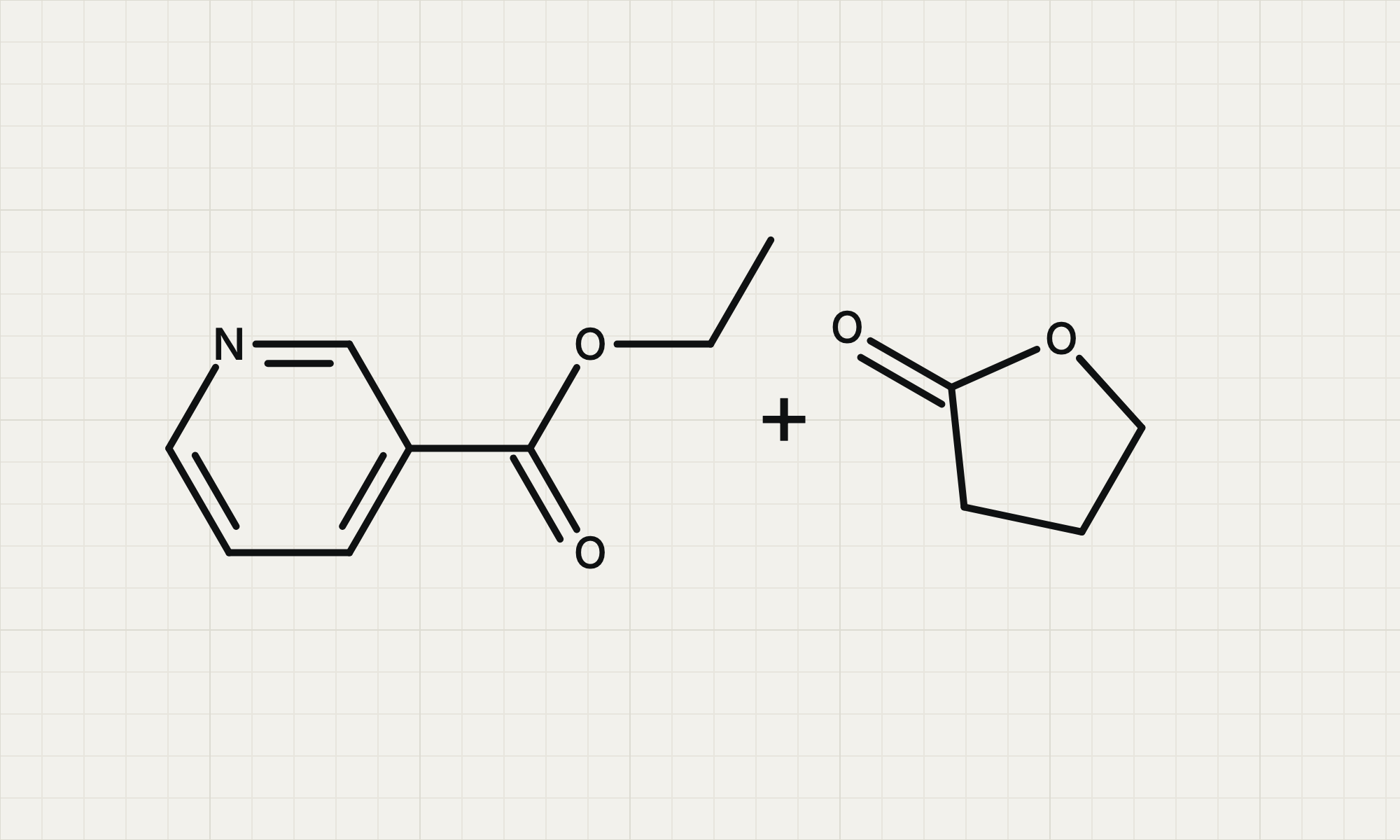
Defined inputs
Industrial starting materials, each bought to its own specification and certificate of analysis. No leaf, so no harvest-to-harvest variation.
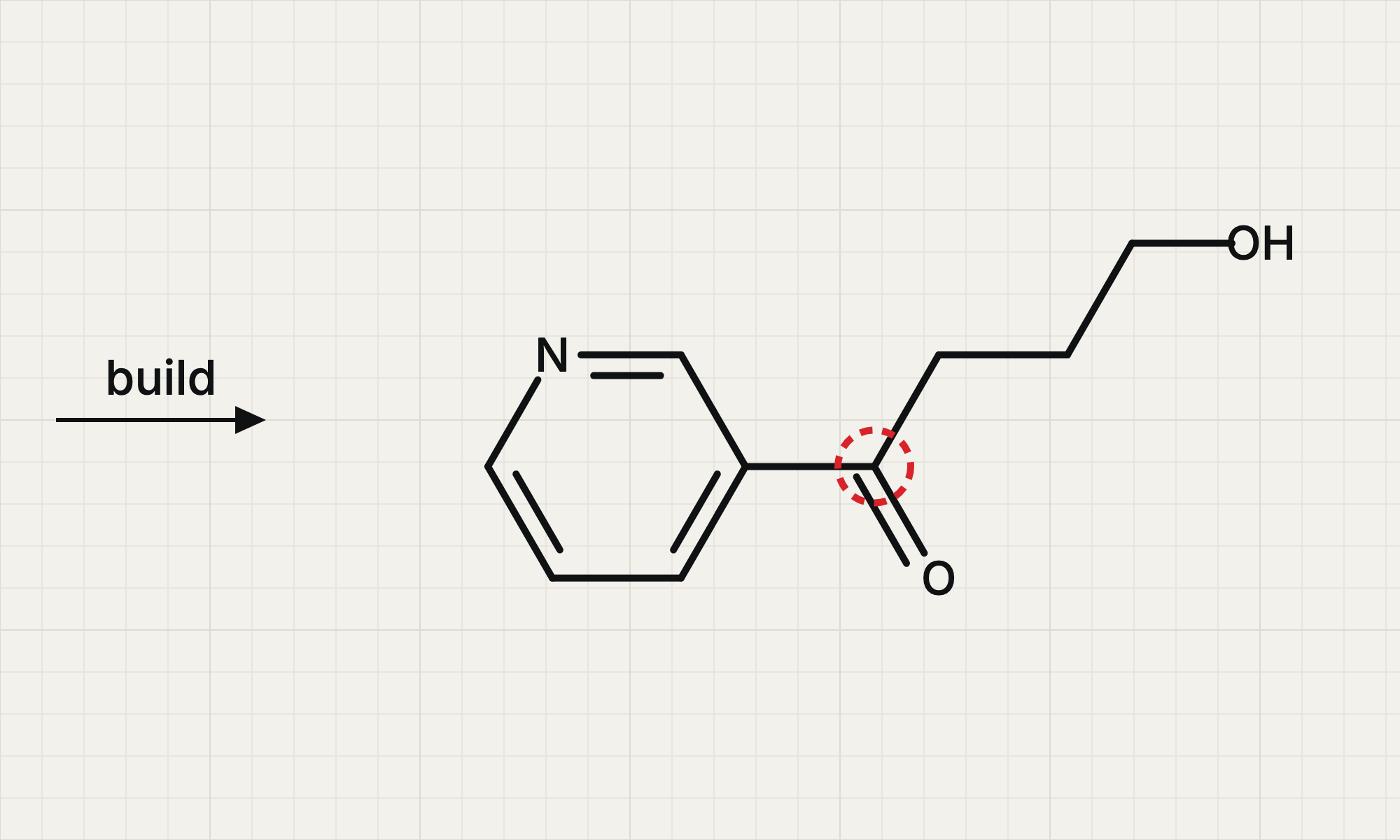
Built, not extracted
The nicotine skeleton is assembled in a controlled reaction. Plant-only alkaloids such as anabasine and anatabine have no way in.
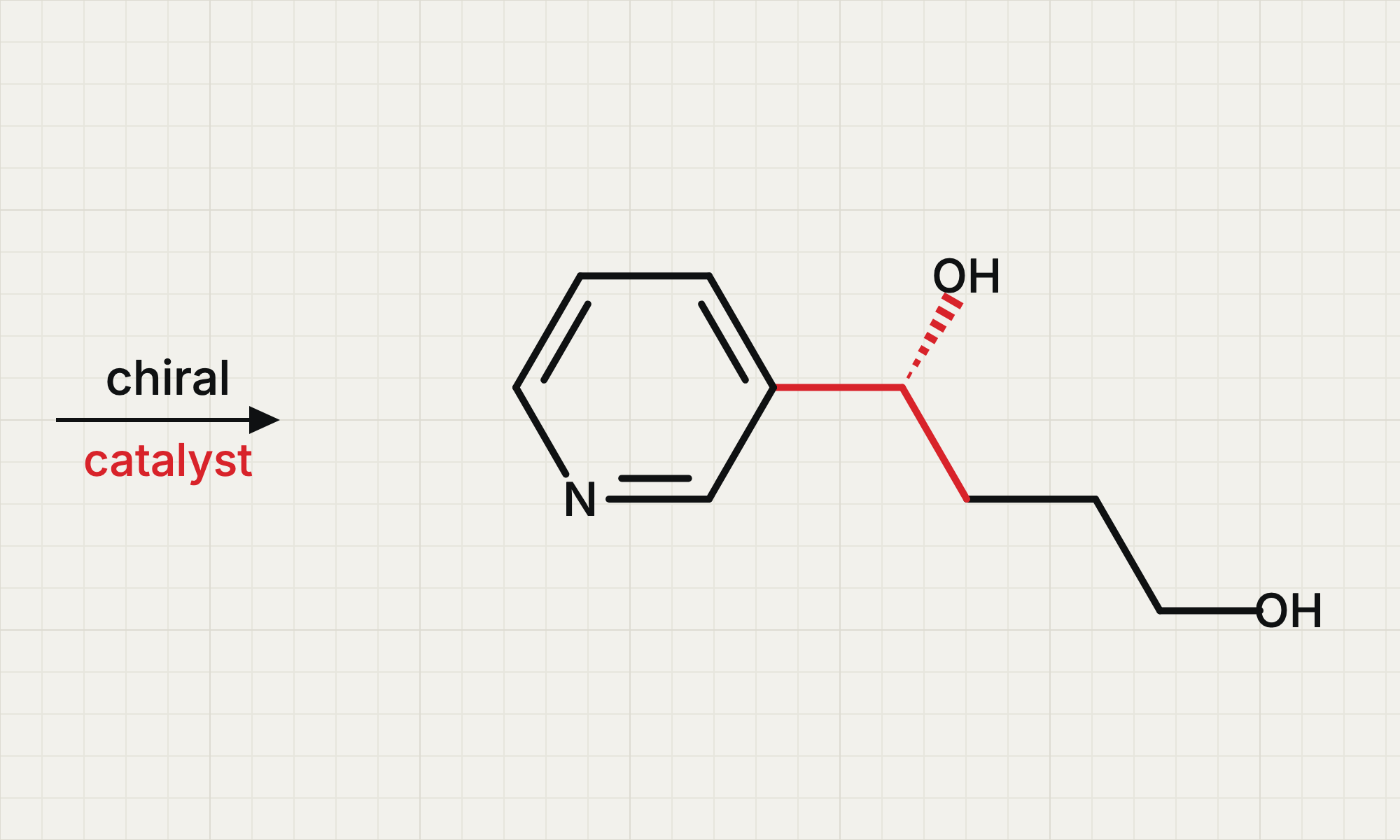
Only the (S)-form
A chiral catalyst builds the same (S)-nicotine the plant makes, not a 50/50 racemic mix, so it replaces tobacco-derived nicotine molecule for molecule.
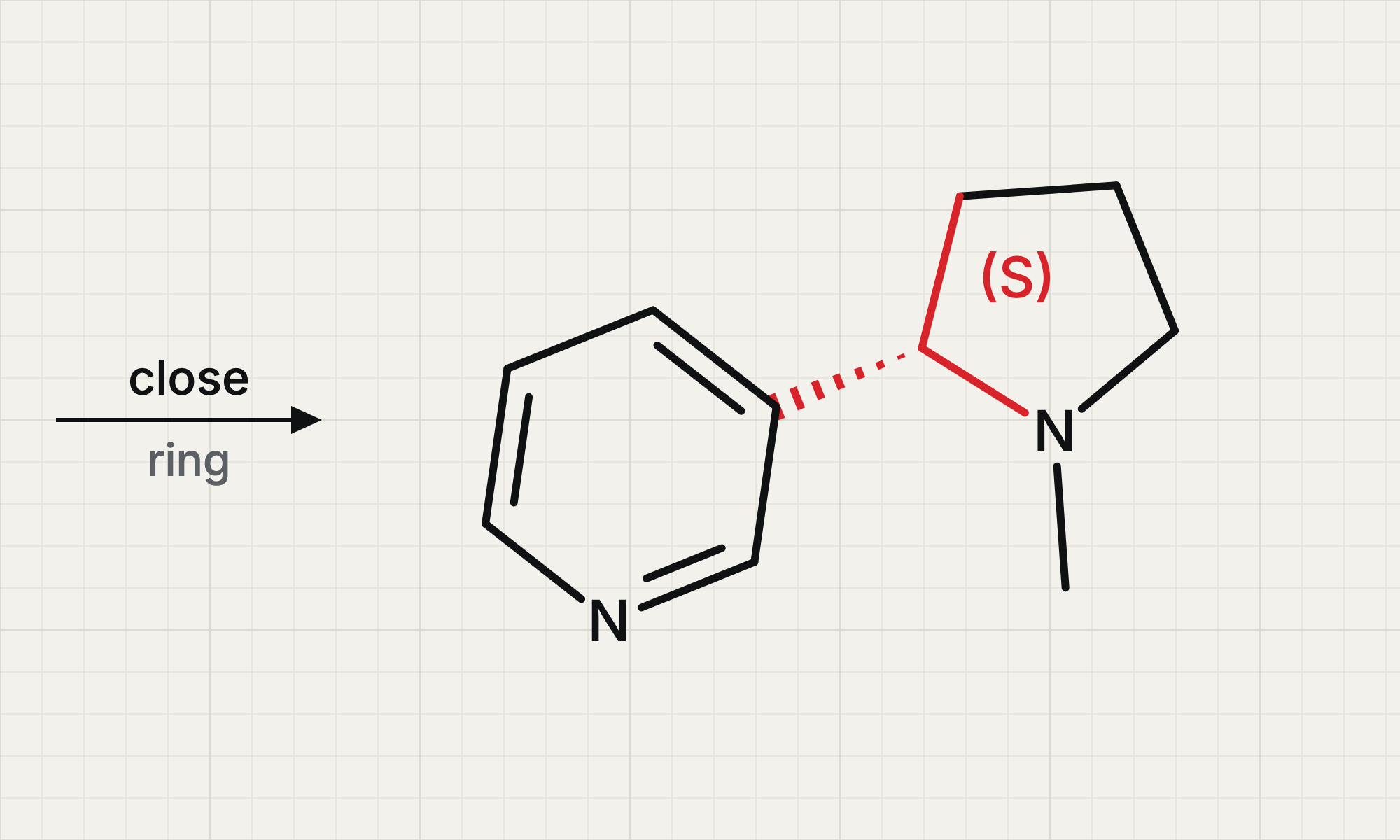
Released to specification
Purified, tested and released with a certificate of analysis for every batch. First industrial batch (149 kg): 99.9% purity, ee 99.85%.
Prof. Xumu Zhang's group developed asymmetric hydrogenation for (S)-nicotine.
Patent details are shared under NDA.
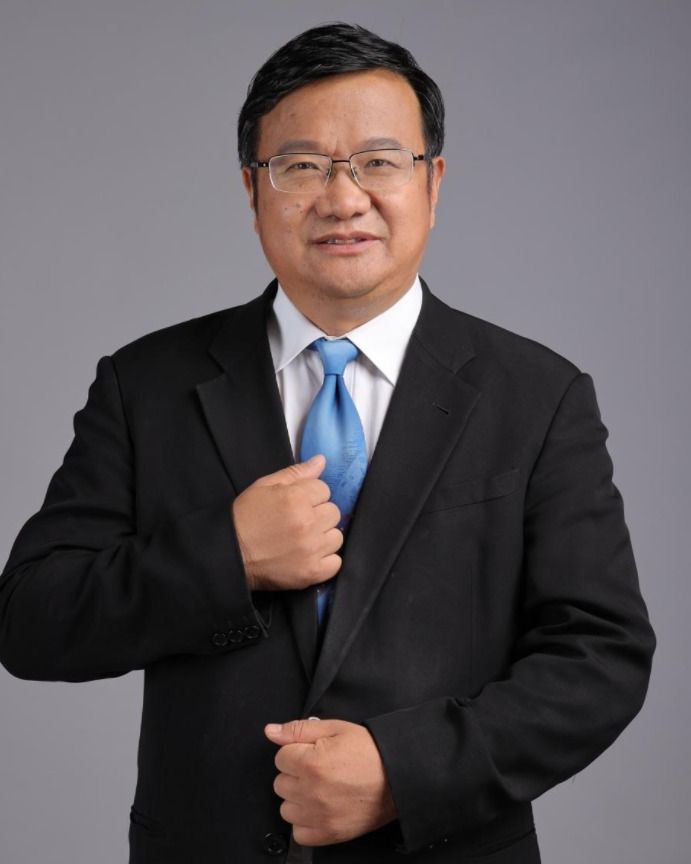
Prof. Xumu Zhang
One of the world's leading figures in asymmetric catalysis, with more than three decades at Stanford, Penn State, Rutgers and SUSTech. As ESSENZ's Chief Scientist, he brings the chemistry behind our (S)-nicotine: his group developed asymmetric hydrogenation for (S)-nicotine, published in Nature Communications (2023). Patent details are shared under NDA.
- 1982
- B.S., Wuhan University
- 1985
- M.S., Fujian Institute, CAS · adv. Lu Jiaxi
- 1992
- Ph.D., Stanford University · adv. J. P. Collman
- 1994–06
- Faculty, Penn State (Professor from 2003)
- 2007–15
- Distinguished Professor, Rutgers
- 2015–18
- Founding Chair of Chemistry, SUSTech
- 2018–23
- Assoc. Dean, College of Science, SUSTech
- Current
- Director, SUSTech Pingshan Biomedical Research Institute (Medi-X Pingshan)
- 2022
- Foreign Academician, Russian Academy of Engineering
- 2021
- Fellow, Chinese Chemical Society
- 2002
- Arthur C. Cope Scholar Award, ACS
“Chiral catalysis lets us build nicotine the way nature intended, only cleaner. Fewer impurities, less harm, and at a lower cost than any nicotine grown in a field.”
Prof. Xumu Zhang, Chief Scientist
Harm reduction shouldn't cost the earth.
Moving nicotine from field to reactor removes the cropland, the pesticides and the farm-labour risk from our clients' supply chains — and makes every batch traceable.
Environmental
- No cropland, pesticides or curing fuel
- > 95% less water than tobacco-derived nicotine2
Social
- Strict B2B, no retail or youth-facing sales
Governance
- GMP-certified manufacturing partner
- Client audits welcome, under NDA
- Swiss company (SA), registered in Pully, Vaud
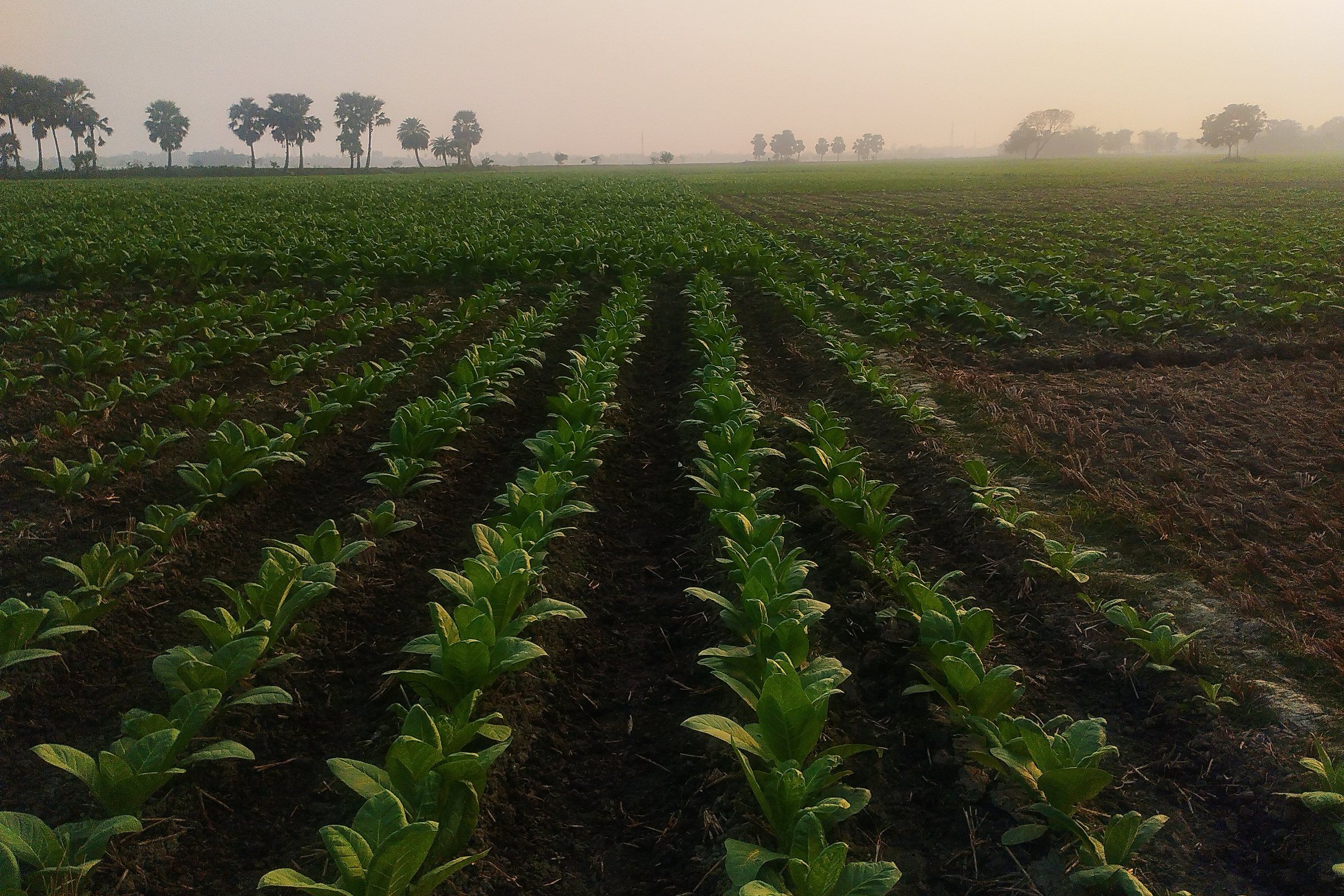
Photo মোঃ সাকিবুল হাসান · CC BY 4.0
.jpg)
- Land
- 56–380 ha
- Water
- 0.3–2.0 million m³
- Time
- One growing season a year
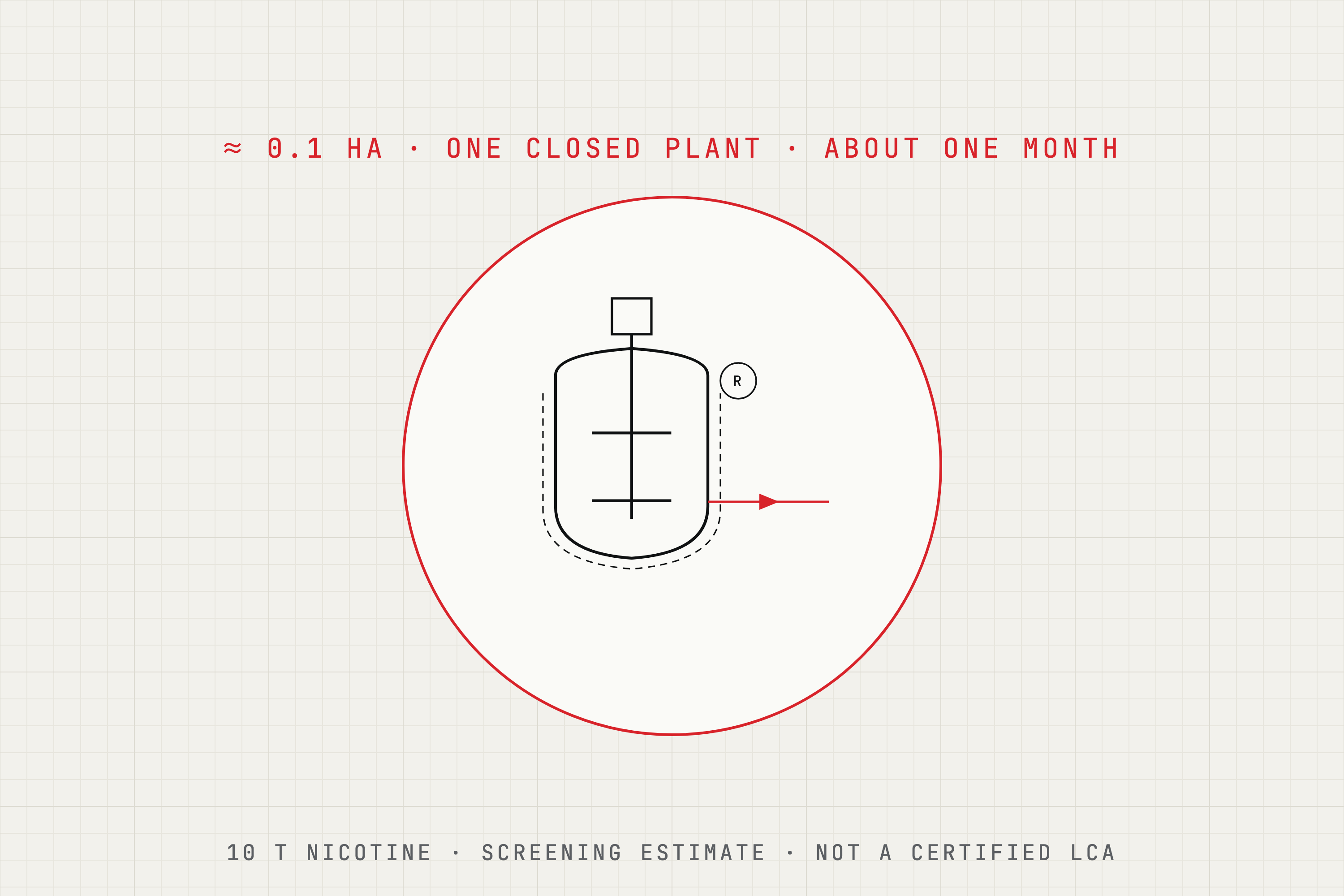
- Land
- ≈ 0.1 ha
- Water
- ≈ 11,000 m³
- Time
- About one month, all year
How we estimated these figures
A screening estimate per tonne of nicotine, not a certified life-cycle assessment; the box above multiplies it by ten (10 t, one month at our manufacturing partner's capacity). Tobacco: FAOSTAT 2024 leaf yields and Mekonnen & Hoekstra (2011) crop water footprints (green, blue and grey water), with 1.5–3.5% leaf nicotine and 65–87% extraction recovery. Because tobacco nicotine can be extracted from by-products of leaf processing, the comparison allocates the crop's burden by market value (by-products ≈ 11% of leaf value, UN Comtrade 2023); leaf grown for nicotine is shown for context. ESSENZ: plant-site land, site water withdrawal and upstream water for electricity and chemicals, modelled from our process and Chinese industry benchmarks rather than metered plant data. Percentages use the by-product case. The water figure is a central estimate: taking both ranges at their least favourable ends, it is about 73% less. Carbon is not compared. Full method available on request.
Made to your specification.
(S)-nicotine free base with a certificate of analysis. Samples first; commercial volumes on request.
Audit-ready, on time.
We publish where each filing stands, including the ones still in progress.
US TPMF
Tobacco Product Master File, referenced by customers’ PMTAs.
GMP partner
Manufacturing at a GMP-certified partner site.
EU · REACH
Registration route for EU supply (importer or only representative), with counsel.
Everything your quality team will ask for.
- Certificate of analysisper batch
- Safety data sheetSDS
- Impurity profileunder NDA
- Analytical methodsunder NDA
Give every harm-reduction product a nicotine that is cleaner, traceable and free of the field.
-
Leo Chen
Chief Executive Officer
-
Prof. Xumu Zhang
Chief Scientist
-
Alexander Daller
Co-founder · Sales Director
Pully
ESSENZ Scientific SA. Corporate, commercial and regulatory affairs.
Shenzhen
Prof. Xumu Zhang, our Chief Scientist, and his research team: catalyst and process development.
China
Contract manufacturing at a GMP-certified partner site; capacity up to 10 t per month.
Questions buyers ask.
Short answers on synthetic (S)-nicotine: what it is, how it compares with nicotine from tobacco, and how we supply it.
What is synthetic nicotine, or tobacco-free nicotine (TFN)?
Nicotine made by chemical synthesis instead of being extracted from tobacco leaf; the industry often calls it tobacco-free nicotine (TFN). ESSENZ makes (S)-nicotine, the form that tobacco produces, by chiral catalysis; no tobacco material is used at any stage.
Is synthetic (S)-nicotine the same as tobacco-derived nicotine?
Yes, it is the same molecule. Tobacco-derived nicotine is about 99% (S)-nicotine; our first industrial batch had an enantiomeric excess of 99.85%, which is 99.9% (S). Racemic synthetic nicotine is a different product: a 50:50 mix of (S) and (R). Synthetic vs tobacco-derived nicotine →
How pure is ESSENZ (S)-nicotine?
The first industrial batch (149 kg, September 2026) measured 99.9% purity (100% minus total impurities of 0.10%) and 99.85% ee. Every batch ships with a certificate of analysis.
How is it made?
From defined industrial starting materials, each with its own specification and certificate of analysis. A chiral catalyst sets the (S)-form in one step, the ring is closed, and the product is purified and released to specification. The chemistry comes from the group of our Chief Scientist, Prof. Xumu Zhang (Nature Communications, 2023).
Does synthetic nicotine contain TSNAs?
Tobacco-specific nitrosamines (TSNAs) form mainly when tobacco alkaloids react with nitrite as the leaf is cured and stored. Our process uses no leaf, so that route does not occur; what remains is chemistry a specification can control, namely precursor impurities and nitrite. TSNAs in nicotine →
Which products is ESSENZ nicotine for?
Nicotine pouches, e-liquids, heated products and pharmaceutical nicotine replacement therapy. We supply manufacturers only, business to business; we do not sell at retail.
What packaging, samples and capacity do you offer?
Free base in 25 kg drums. Samples from 10 g ship within two weeks with a full certificate of analysis. Capacity is up to 10 t a month.
Where is it manufactured?
Under contract at a GMP-certified partner site in China, managed from our headquarters in Pully, Switzerland. Client audits are welcome under NDA.
How does synthetic nicotine compare on land and water?
In our screening estimate, it takes more than 99% less land and more than 95% less water per tonne than tobacco-derived nicotine. This is not a certified life-cycle assessment, and carbon is not compared.
Which documents and registrations are available?
A certificate of analysis with every batch; the safety data sheet and specification on request. A US Tobacco Product Master File is in preparation and our EU REACH route is under review.
Put it through your own lab.
Samples with a full CoA ship within two weeks to qualified B2B customers.
1009 Pully · Switzerland
Notes and sources
- Certificate of analysis ESN-COA-2026-0920, first industrial batch NGD-20260920 (149 kg, produced 20 Sep 2026): purity = 100% minus total impurities (0.10%); assay 100.5% by titration; ee 99.85%. Available on request.
- ESSENZ screening estimate, not a certified life-cycle assessment. Tobacco: FAOSTAT 2024 yields and Mekonnen & Hoekstra (2011) crop water footprints, with the crop’s burden allocated to nicotine by market value. ESSENZ: modelled from our process. How we estimated ↑
- IARC Monographs Vol. 89 (2007); NNN and NNK reaffirmed as Group 1 carcinogens in Vol. 100E (2012).
- NNN in flue-cured and burley leaf, ng/g dry weight: IARC Monographs Vol. 89 (2007), Table 1.
- GOTHIATEK industry standard for snus (2025): NNN + NNK at most 0.95 mg per kg, wet weight.
- Tobacco-derived: three commercial pharmaceutical lots, 100% minus the seven USP related compounds (Cheetham et al., PLoS One 2022). Enzymatic route: patent examples. ESSENZ: 100% minus total impurities. Limits for any origin: assay 99.0–101.0%, related substances ≤ 0.8% (Ph. Eur. 1452, USP). Cheetham et al. 2022 ↗
- Share of (S)-nicotine. Tobacco-derived ≈ 99.3%, racemic 50% (Cheetham et al., PLoS One 2022); enzymatic route: patent examples, ee 98.6–99.87%; ESSENZ: 99.9% (S), from ee 99.85%. Cheetham et al. 2022 ↗